
As parents, we all want our children to stay healthy, active, and protected from frequent cough, cold, fever, and infections. But building a strong immune system is not about one “magic food” or supplement. It is about simple daily habits — good food, proper sleep, hygiene, outdoor play, hydration, and regular pediatric checkups.
A child’s immunity grows slowly with age, nutrition, environment, and routine. Healthy eating supports children’s growth, brain development, and immunity, while sleep and physical activity are also important for overall health.
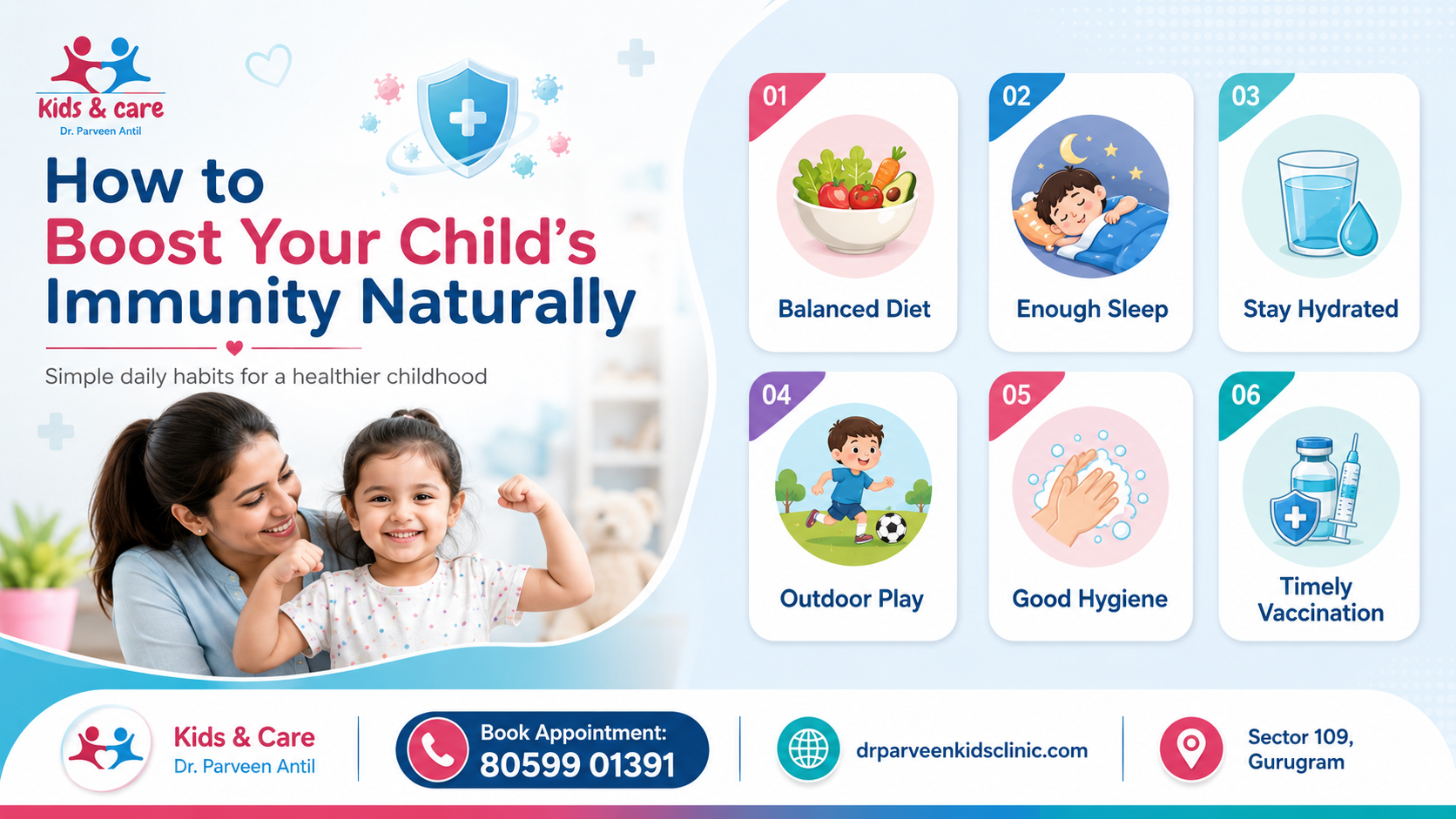
1. Give a Balanced, Colorful Diet
Food is one of the strongest foundations of immunity. Try to include different food groups in your child’s daily meals:
Fresh fruits like oranges, apples, bananas, papaya, guava, and berries.
Vegetables like spinach, carrot, pumpkin, beetroot, broccoli, and beans.
Protein-rich foods like dal, paneer, curd, eggs, fish, chicken, sprouts, and pulses.
Whole grains like roti, rice, oats, daliya, poha, and millets.
Nuts and seeds like almonds, walnuts, peanuts, chia seeds, and sesame seeds, depending on the child’s age and allergy history.
A diverse, nutrient-rich diet helps children get important vitamins and minerals. For younger children, UNICEF recommends nutrient-dense meals from different food groups after 6 months, along with safe feeding practices.
2. Add Vitamin C and Iron-Rich Foods
Vitamin C helps support normal immune function and helps the body absorb iron. You can include lemon, amla, orange, guava, tomato, and capsicum in your child’s meals.
Iron-rich foods like green leafy vegetables, lentils, beans, jaggery in moderation, eggs, and meat help support energy and growth. Low iron can make children feel tired and weak. Pairing iron-rich foods with Vitamin C foods can help better absorption.
3. Don’t Skip Curd and Gut-Friendly Foods
A large part of immunity is linked with gut health. Curd, homemade lassi, buttermilk, and fermented foods can support healthy digestion in many children.
But every child is different. If your child has lactose intolerance, frequent stomach upset, or allergy symptoms, speak to a pediatrician before adding dairy or fermented foods regularly.
4. Make Sleep a Priority
Many parents focus only on food, but sleep is equally important. Poor sleep can affect the immune system and may make a child more likely to fall sick after exposure to viruses.
A simple bedtime routine helps a lot. Keep dinner light, reduce screen time before bed, keep the room calm, and try to follow the same sleep timing every day. Mayo Clinic also recommends consistent sleep and wake routines, a relaxing bedtime routine, and keeping screens out of the bedroom.
5. Encourage Outdoor Play and Physical Activity
Children need movement. Running, cycling, playing in the park, dancing, swimming, or simple outdoor games help improve stamina, mood, appetite, and overall health.
Physical activity also helps children maintain a healthy weight and supports mental and physical well-being. CDC highlights healthy eating, physical activity, sleep, and limited screen time as important parts of children’s health routines.
6. Keep Your Child Hydrated
Water helps the body function properly. Many children forget to drink enough water, especially during school, playtime, or summer.
You can give water, coconut water, homemade soups, fresh fruits with high water content, and lemon water. Avoid too many packaged juices, cold drinks, and sugary beverages.
7. Teach Simple Hygiene Habits
Immunity is not only about what children eat. Prevention is also important.
Teach your child to wash hands before eating, after using the washroom, after coming from outside, and after coughing or sneezing. Also teach them not to share water bottles, towels, or food when someone is sick.
These small habits reduce the chances of infections spreading at home and school.
8. Avoid Overuse of Junk Food and Packaged Snacks
Chips, sugary drinks, biscuits, chocolates, instant noodles, and fried snacks may make children feel full but do not give enough nutrition.
You don’t need to ban everything completely, but keep these foods occasional. For daily snacking, try fruits, roasted makhana, peanuts, sprouts chaat, paneer cubes, homemade sandwiches, boiled eggs, vegetable cheela, or poha.
9. Don’t Give Supplements Without Doctor Advice
Many parents start immunity syrups, multivitamins, or herbal products without checking if the child really needs them. This is not always safe or necessary.
Supplements should be given only when recommended by a pediatrician, especially for Vitamin D, iron, calcium, zinc, or any deficiency. Natural immunity is best supported through food, sleep, activity, vaccination, and healthy routines.
10. Stay Updated With Vaccinations
Vaccination is one of the most important ways to protect children from serious infections. It helps the immune system learn how to fight specific diseases safely.
Parents should follow the vaccination schedule advised by their pediatrician and keep the child’s vaccination record updated.
When Should You Visit a Pediatrician?
Consult a child specialist if your child has frequent fever, repeated infections, poor weight gain, loss of appetite, breathing difficulty, persistent cough, unusual tiredness, repeated loose motions, or any sudden change in behavior.
Early advice can prevent small health issues from becoming serious.
Final Words
Boosting your child’s immunity naturally is not a one-day process. It is a daily routine. A plate full of colors, enough sleep, outdoor play, clean habits, proper hydration, timely vaccination, and regular pediatric checkups can make a big difference in your child’s health.
At Kids & Care Clinic, we are dedicated to supporting your child’s health, growth, and well-being with compassionate pediatric care.
Book an Appointment: 80599 01391
Website: drparveenkidsclinic.com
Location: Shop-101, Ground Floor, Conscient One Mall, Sector 109, Gurugram