
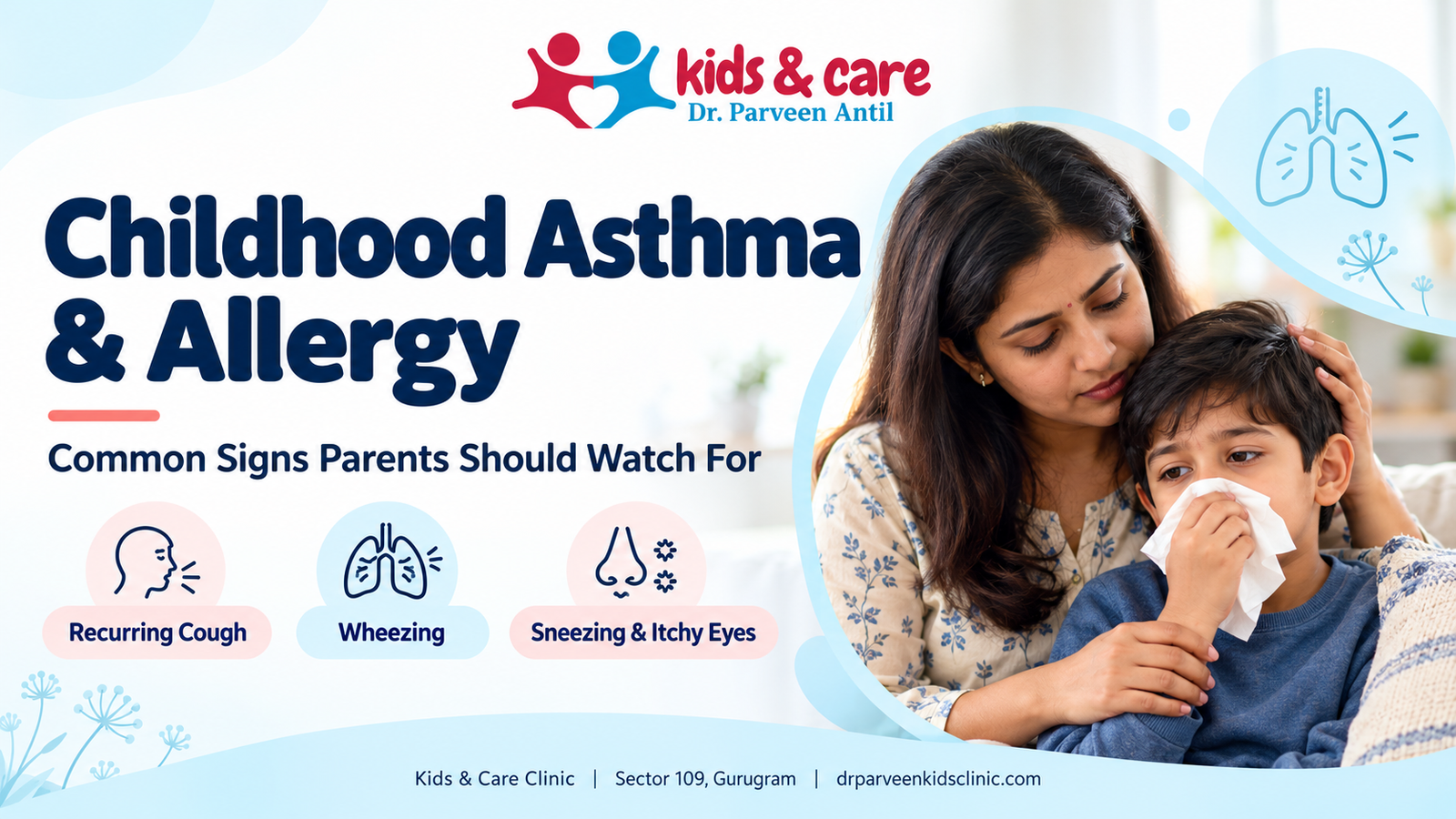
A cough that keeps waking your child at night. Sneezing that returns every morning. Breathlessness that makes them stop playing sooner than usual.
These changes can leave parents wondering whether their child has another cold or needs a closer assessment.
Childhood asthma and allergies can cause recurring symptoms, but they are not the same condition. Understanding the patterns—and knowing when to seek help—can make conversations with your paediatrician more useful.
For families looking for a child specialist in Gurugram, this guide explains what to watch for, what to record and which symptoms need immediate medical attention.
Understanding Childhood Asthma
Asthma affects the airways inside the lungs. Inflammation and tightening around these airways can make breathing more difficult.
Symptoms may come and go, and their severity can change. With appropriate treatment, children with asthma can lead active lives. Repeated symptoms should be assessed rather than accepted as a normal part of childhood.
Common Signs of Asthma in Children
1. A Cough That Frequently Returns at Night
A persistent cough, particularly at night or during exercise, can be associated with asthma. Notice whether it interrupts sleep or repeatedly returns after apparently settling.
Coughing alone does not confirm asthma, but a recurring pattern deserves discussion with a doctor.
2. Wheezing or a Whistling Sound
Wheezing is a whistling sound heard during breathing. It is one of the common symptoms of asthma, alongside coughing, breathlessness and chest tightness.
If you notice repeated episodes, arrange an assessment. Breathing problems can have different causes, so a diagnosis should not be made from the sound alone.
3. Breathlessness During Play
Pay attention when coughing or breathing discomfort repeatedly interrupts running, games or other activities.
Asthma symptoms can become more noticeable during exercise. The aim of assessment and treatment is to help children participate comfortably, rather than automatically keeping them away from physical activity.
4. Chest Tightness or Disturbed Sleep
Some children describe their chest as feeling tight. Others may mainly experience night-time symptoms, disturbed sleep or daytime tiredness.
These patterns are worth mentioning even if your child appears comfortable during the appointment.
Common Allergy Signs Parents May Notice
Repeated Sneezing and an Itchy Nose
Allergic rhinitis can cause sneezing, nasal itching and a runny or blocked nose. Symptoms may appear soon after exposure to an allergen, such as pollen, house dust mites, mould or animal dander.
Because these symptoms can resemble a cold, note when they happen and whether the same exposure seems to bring them back.
Itchy, Watery or Red Eyes
Eye irritation alongside sneezing or nasal symptoms can also occur with allergic rhinitis. Arrange a consultation when symptoms repeatedly affect your child’s sleep, comfort or everyday activities.
Hives or Symptoms After Eating
Food allergies may cause an itchy, raised rash, vomiting, abdominal discomfort or other symptoms. Some reactions involve breathing difficulties and can be serious.
If you suspect a food allergy, record what was eaten and when symptoms appeared. Seek medical advice rather than experimenting with the suspected food at home. Do not remove several foods from your child’s diet without professional guidance.
Are Asthma and Allergies Connected?
They can occur together. Children with allergic conditions or a family history of asthma and allergies may be more likely to develop asthma.
However, an allergy does not automatically mean a child has asthma. The doctor needs to consider the symptoms, history and examination together.
Triggers Worth Discussing With Your Paediatrician
Possible asthma triggers include smoke, air pollution, cold air, infections, exercise and allergens. Different children may react to different exposures.
For your appointment, consider these questions:
- Does the cough occur mainly at night or after outdoor play?
- Do symptoms change between home, school and other locations?
- Is there a pattern around cleaning, pets or particular foods?
- How often does your child wake, stop playing or miss school?
- What medicines have already been used, and did they help?
These observations help describe the problem; they do not establish the cause by themselves.
When to Seek Emergency Help
Severe breathing difficulty or a rapidly worsening asthma attack requires emergency care. Do not wait for a routine clinic appointment. If your child has an asthma action plan, follow its emergency instructions while seeking help.
A severe allergic reaction, called anaphylaxis, can develop quickly. Warning signs include:
- Sudden swelling of the tongue, mouth or throat
- Difficulty breathing or swallowing
- Blue, grey or unusually pale lips
- Fainting, marked confusion or reduced responsiveness
- A child becoming limp or floppy
Call an ambulance immediately for a suspected severe allergic reaction. If your child has a prescribed adrenaline auto-injector, use it according to their emergency plan. Hospital assessment is still needed even if symptoms improve. A rash may occur, but do not wait for one before seeking help.
What Happens During an Assessment?
The paediatrician may ask about symptom timing, previous episodes, family history and possible triggers, then examine your child.
Breathing tests may be considered when appropriate. If food allergy is suspected, a specialist may recommend selected tests or a supervised dietary assessment. A food-and-symptom diary can help guide that discussion.
Bring previous prescriptions, reports and any inhalers your child currently uses. Write down your main concerns so they are easy to discuss.
Practical Ways to Support Your Child
For confirmed nasal allergies, reducing relevant exposures may help. Regularly washing bedding, damp-dusting and addressing indoor damp or mould are examples of measures to discuss with your clinician. Changes should reflect your child’s likely triggers.
For asthma, prescribed inhaled medicines and correct technique are important parts of treatment. A spacer can help children use certain inhalers effectively. Ask the healthcare professional to demonstrate the technique and check your child’s use.
For diagnosed food allergies, check ingredient labels and ensure school staff and other caregivers understand the allergy plan.
Childhood Asthma and Allergy Consultation in Sector 109, Gurugram
Recurring cough, wheezing or allergy symptoms deserve an individual assessment.
Kids & Care Clinic offers paediatric consultations, including childhood asthma and allergy concerns, with Dr. Parveen Kumar Antil, Consultant Paediatrician & Neonatologist.
Families can arrange a consultation to discuss symptoms, previous treatment and whether further evaluation or specialist referral is needed.
Clinic: Kids & Care Clinic
Address: Shop 101, Ground Floor, Conscient One Mall, Sector 109, Gurugram
Appointments: +91 80599 01391
Website: drparveenkidsclinic.com
This article provides general information and does not diagnose asthma or allergies. Seek urgent medical care for severe or worsening breathing symptoms.
Medical disclaimer: This information is for general education and does not replace a medical examination, diagnosis or personalised treatment. Seek urgent medical care for severe or rapidly worsening symptoms.