
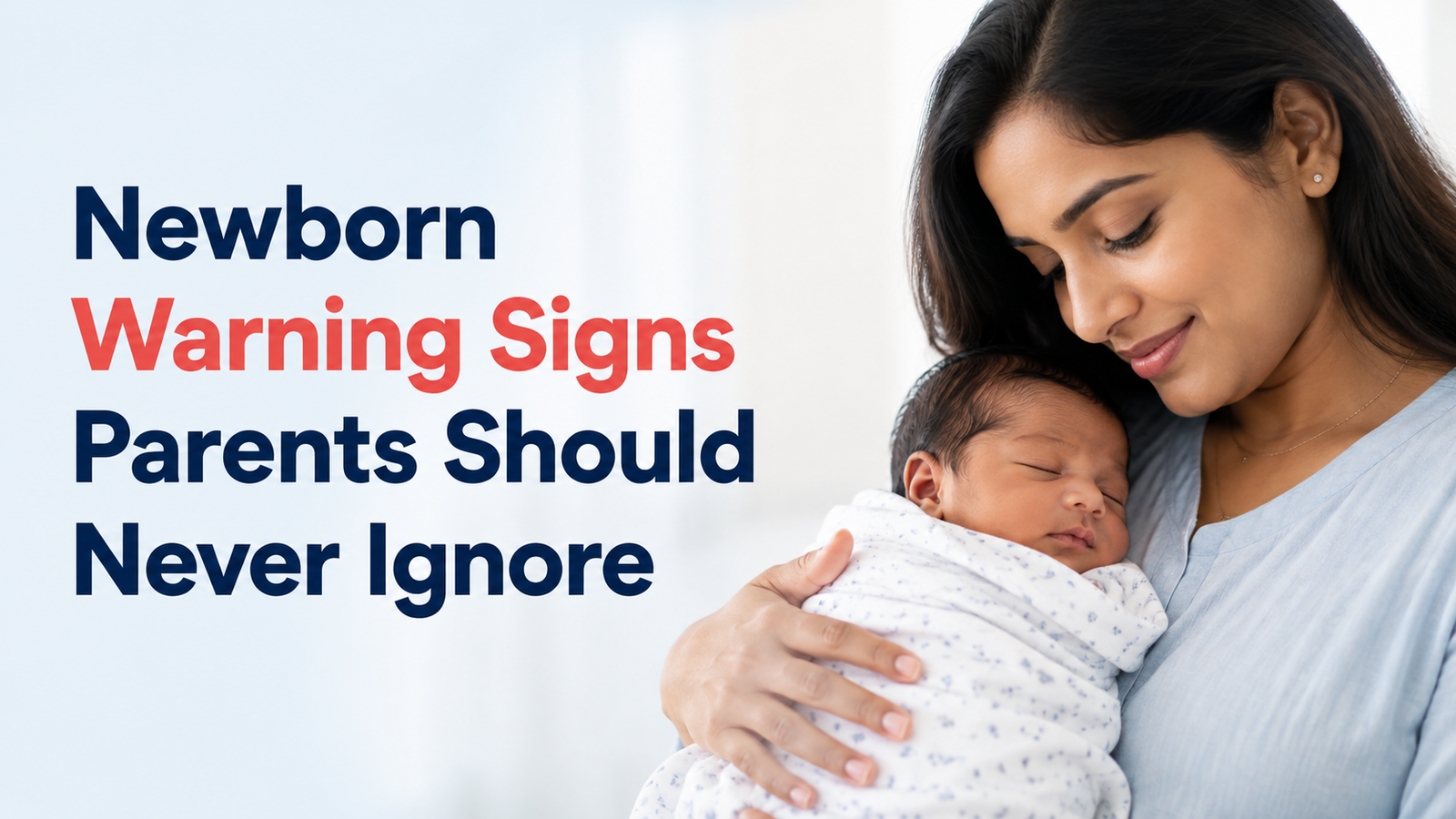
Bringing a newborn home is a beautiful moment, but it can also make even the calmest parent feel unsure. New babies sleep a lot, feed frequently, make unfamiliar sounds and may have small changes from one hour to the next. When you are tired and still learning your baby’s routine, it is natural to wonder: Is this normal, or does my baby need medical care?
Most newborn changes are harmless, but some symptoms should never be watched and waited on. A newborn is a baby in the first 28 days of life. During this period, the immune system and organs are still adapting, and an illness can sometimes become serious faster than it would in an older child. That is why recognizing newborn warning signs early matters so much.
This guide explains the most important newborn danger signs in simple language. It is designed to help parents know when to call a pediatrician, when urgent assessment may be needed and what information to carry when leaving for medical care. It does not replace an examination by a qualified doctor.
Important: Do not wait for several symptoms to appear. If your newborn has difficulty breathing, turns blue or grey, is hard to wake, has a seizure, has a temperature of 38 C or higher, stops feeding, or vomits green fluid, seek urgent medical care. |
Why Newborn Warning Signs Need Quick Attention
A newborn may not show illness in the same way as an older child. There may be no loud cough, obvious pain or high fever. Sometimes the first clue is simply that the baby is feeding less, sleeping differently, moving less or looking a different colour. Parents and caregivers are often the first people to notice that something feels off.
WHO newborn-care guidance highlights feeding problems, reduced activity, difficult breathing, fever, convulsions and an unusually cold body as important danger signs. UNICEF also advises parents to pay attention to changes in skin colour and forceful vomiting. The practical message is simple: a significant change from your baby’s usual behaviour deserves attention, even when you cannot name the cause.
1. Difficulty Breathing or Bluish Lips
Newborns normally breathe faster than adults, and their breathing rhythm can sometimes look irregular. However, breathing that remains very fast, looks difficult or is accompanied by a colour change is not something to ignore.
Seek urgent medical assessment if you notice:
Breathing that remains faster than about 60 breaths per minute while the baby is calm
The skin pulling in between or below the ribs with each breath
Grunting sounds, nostrils flaring or the head bobbing while breathing
Repeated pauses in breathing, especially if the baby looks pale or limp
Blue, grey or dusky colour around the lips, tongue or face
Breathing difficulty that prevents the baby from feeding normally
Blue lips or tongue, severe chest pulling, grunting, long pauses or difficulty waking the baby should be treated as an emergency. Do not wait for the colour or breathing to improve on its own.
2. Poor Feeding or Refusing Feeds
Feeding is one of the clearest windows into a newborn’s wellbeing. A baby may occasionally have a shorter feed, but a repeated or sudden change in feeding can be an early sign of illness.
Contact a pediatrician promptly if your baby:
Has a weak suck or cannot stay awake long enough to feed
Refuses several feeds or takes much less milk than usual
Coughs, chokes, sweats or becomes breathless during feeds
Frequently falls asleep immediately after latching and cannot complete a feed
Feeds poorly along with vomiting, fever, unusual coldness or reduced wet diapers
Poor feeding is especially urgent when it appears together with unusual sleepiness, breathing difficulty, reduced movement or a change in colour. Do not force-feed a baby who is struggling to breathe or actively vomiting; arrange medical care instead.
3. Fever or an Unusually Low Temperature
Temperature changes in a newborn require more caution than they do in older children. According to the American Academy of Pediatrics’ parent guidance, a baby aged three months or younger with a rectal temperature of 38 C (100.4 F) or higher needs immediate contact with a pediatrician. Even if the baby otherwise looks comfortable, a fever in this age group can be the first sign of a serious infection.
An unusually low temperature can also be concerning. A newborn who feels persistently cold, looks pale or mottled, feeds poorly or is less active should be assessed promptly. Use a reliable digital thermometer and tell the doctor how and where the temperature was measured.
Do not give paracetamol, antibiotics or any over-the-counter medicine to a newborn unless a pediatrician has personally advised the dose and timing for that baby.
4. Very Sleepy, Floppy or Difficult to Wake
Newborns spend much of the day asleep, so sleep itself is not a danger sign. The concern is a clear change in responsiveness. A healthy sleeping baby should still wake or respond enough to feed, move and react to touch.
Warning signs include:
The baby is much harder to wake than usual
The baby will not wake for feeds or immediately becomes unresponsive again
Movements are weak, reduced or only happen after repeated stimulation
The body feels unusually floppy or limp
The cry is weak, unusually high-pitched or very different from normal
If your baby cannot be awakened normally, is not moving or appears unresponsive, seek emergency help immediately.
5. Repeated, Forceful, Green or Bloody Vomiting
Small milk spit-ups are common in newborns. They usually dribble out gently and the baby often remains comfortable. Vomiting is more forceful and may be accompanied by distress, poor feeding, a swollen abdomen or lethargy.
Contact a doctor urgently if vomiting is repeated, forceful, contains blood, looks like coffee grounds or the baby cannot keep feeds down. Green vomit is particularly important. Green fluid may contain bile and can indicate a blockage that needs urgent medical assessment. Do not wait for a second green vomit before seeking care.
A baby who is vomiting and also has fewer wet diapers, dry mouth, unusual sleepiness or a sunken soft spot may be becoming dehydrated.
6. Very Few Wet Diapers or Signs of Dehydration
Wet-diaper patterns change during the first days after birth, which is why your baby’s age and feeding method matter. The safest approach is to learn the pattern your pediatrician expects for your baby and pay attention to a noticeable drop from that pattern.
Possible signs of dehydration include:
Far fewer wet diapers than usual or no urine for many hours
A very dry mouth or sticky saliva
A sunken soft spot on the top of the head
Poor feeding, repeated vomiting or diarrhoea
Unusual sleepiness, irritability or cool hands and feet
Dehydration can progress quickly in a newborn. If feeds are not staying down or urine output has clearly reduced, contact your pediatrician promptly rather than trying home remedies.
7. Jaundice That Is Appearing Early or Getting Worse
Jaundice causes a yellow colour in the skin or the whites of the eyes. Mild jaundice is common after birth, but the timing, spread and intensity matter. Jaundice that appears in the first 24 hours, becomes deeper, spreads to the abdomen, arms or legs, or is visible on the palms and soles needs prompt medical advice.
Call your baby’s doctor if yellowing is increasing or if jaundice is accompanied by poor feeding, unusual sleepiness, difficulty waking, dark urine or pale/white stools. Do not try to judge severity from photographs alone. A clinician may need to examine the baby and measure bilirubin.
8. Seizures, Stiffening or Repeated Jerky Movements
Newborns can startle and make brief, irregular movements during sleep. A seizure may look different: repeated rhythmic jerking, prolonged stiffening, unusual eye movements, repeated lip smacking or episodes in which the baby stops responding.
If jerking continues when you gently hold the limb, the baby becomes stiff, the eyes repeatedly roll or the baby is not responsive, seek emergency medical care. Do not place anything in the baby’s mouth and do not try to restrain the movements forcefully. If safe, note the time the episode started and record a short video for the medical team without delaying your departure.
9. Redness, Swelling or Pus Around the Umbilical Cord
The umbilical stump normally dries and separates on its own. A small amount of dried blood can occur, but spreading redness, swelling, warmth, pus or a foul smell can suggest infection.
Seek medical care promptly if the skin around the stump is becoming red, the redness is spreading, pus is draining, the area smells unpleasant or the baby also has fever, low temperature, poor feeding or reduced activity. Keep the stump clean and dry and avoid applying powders, oils, ash or home remedies unless your pediatrician has specifically recommended a product.
10. A Major Change in Cry, Colour or Behaviour
Parents often notice a problem before any measurement confirms it. A baby who suddenly becomes inconsolable, develops a weak or unusually high-pitched cry, looks persistently pale or mottled, or behaves very differently from normal should be assessed.
Trust your observation. You do not need to wait until you can explain exactly what is wrong. When a newborn looks or acts sick, calling a pediatrician is the appropriate next step.
When Should Parents Seek Emergency Care?
Go to the nearest emergency department or call emergency services immediately if your newborn:
Is struggling to breathe, has severe chest pulling, grunts or turns blue/grey
Cannot be awakened, is unresponsive, floppy or not moving normally
Has a seizure, prolonged stiffening or repeated jerking movements
Vomits green fluid, blood or coffee-ground-like material
Has a temperature of 38 C or higher and is under three months old
Shows severe dehydration, markedly reduced urine or cannot keep feeds down
Has any symptom that appears life-threatening or is worsening rapidly
If you are unsure whether the situation is an emergency, call your pediatrician or local emergency service while arranging transport. Do not delay urgent care while waiting for a social-media reply or online consultation.
What to Note Before You Leave for Medical Care
When possible, gather a few details for the medical team. Do not delay departure to complete this list.
The baby’s age, gestational age at birth and birth weight
When the symptom started and whether it is getting worse
The most recent temperature and how it was measured
When the baby last fed and approximately how much was taken
The number of wet diapers and stools in the past 24 hours
Any vomiting, colour change, breathing difficulty or unusual movement
Birth discharge papers, current medicines and vaccination records
What Parents Should Avoid
Do not give antibiotics, fever medicines, cough syrups or herbal remedies without pediatric advice.
Do not force-feed a newborn who is struggling to breathe, repeatedly vomiting or too sleepy to swallow safely.
Do not wait for every warning sign to appear before seeking help.
Do not compare your baby’s colour only with online photographs; skin tone and lighting can hide important changes.
Do not shake a baby who is difficult to wake. Call for urgent help instead.
Extra Caution for Preterm and Low-Birth-Weight Babies
Babies born early or with a low birth weight may have greater difficulty maintaining body temperature, feeding effectively and fighting infection. Their warning signs can also be subtle. Follow the discharge plan carefully, attend scheduled follow-ups and contact the newborn-care team early if feeding, breathing, temperature or activity changes.
Frequently Asked Questions
Is it normal for a newborn to sleep most of the day?
Yes, newborns sleep for many hours. The concern is not the total sleep time but a change in responsiveness. A baby who cannot be woken enough to feed, moves much less than usual or seems floppy needs urgent assessment.
What temperature is considered a fever in a newborn?
For a baby aged three months or younger, a rectal temperature of 38 C (100.4 F) or higher requires immediate contact with a pediatrician. Do not give fever medicine before the baby is medically assessed unless your doctor has specifically instructed you to do so.
How can I tell spit-up from vomiting?
Spit-up usually flows or dribbles out gently and the baby remains comfortable. Vomiting is more forceful. Repeated forceful vomiting, green vomit, blood, abdominal swelling, lethargy or inability to keep feeds down requires urgent medical advice.
How many wet diapers should my newborn have?
The expected number changes during the first days of life and depends on age and feeding. Ask your pediatrician what is appropriate for your baby. A clear drop from the usual pattern, no urine for many hours or reduced urine together with poor feeding or vomiting should be reported promptly.
Should I wait until morning if my baby is feeding poorly?
Do not wait if poor feeding is significant, repeated or associated with difficult breathing, fever, low temperature, vomiting, fewer wet diapers, unusual sleepiness or a colour change. Newborns can worsen quickly, so early medical advice is safer.
Can newborn jaundice be treated at home with sunlight?
Do not rely on sunlight or home remedies to judge or treat jaundice. A pediatrician may need to check bilirubin and decide whether monitoring or medical treatment is required.
A Final Word for Parents
Caring for a newborn is not about noticing every tiny sound or becoming anxious about every feed. It is about learning your baby’s usual pattern and responding when something changes. If your newborn is breathing differently, feeding poorly, unusually sleepy, vomiting repeatedly, producing fewer wet diapers, developing worsening jaundice or simply looks unwell, reach out for medical help.
Your concern is valid. You are not wasting a doctor’s time by asking about a newborn. Early assessment can provide reassurance when everything is fine and timely treatment when it is not.
Need pediatric guidance for your newborn? |
Medical Disclaimer
This article is for general education and awareness only. It is not a diagnosis, treatment plan or substitute for an in-person assessment by a qualified pediatrician. Newborn symptoms can change quickly. If you are worried about your baby, seek professional medical advice promptly. In an emergency, go to the nearest emergency department or call local emergency services.