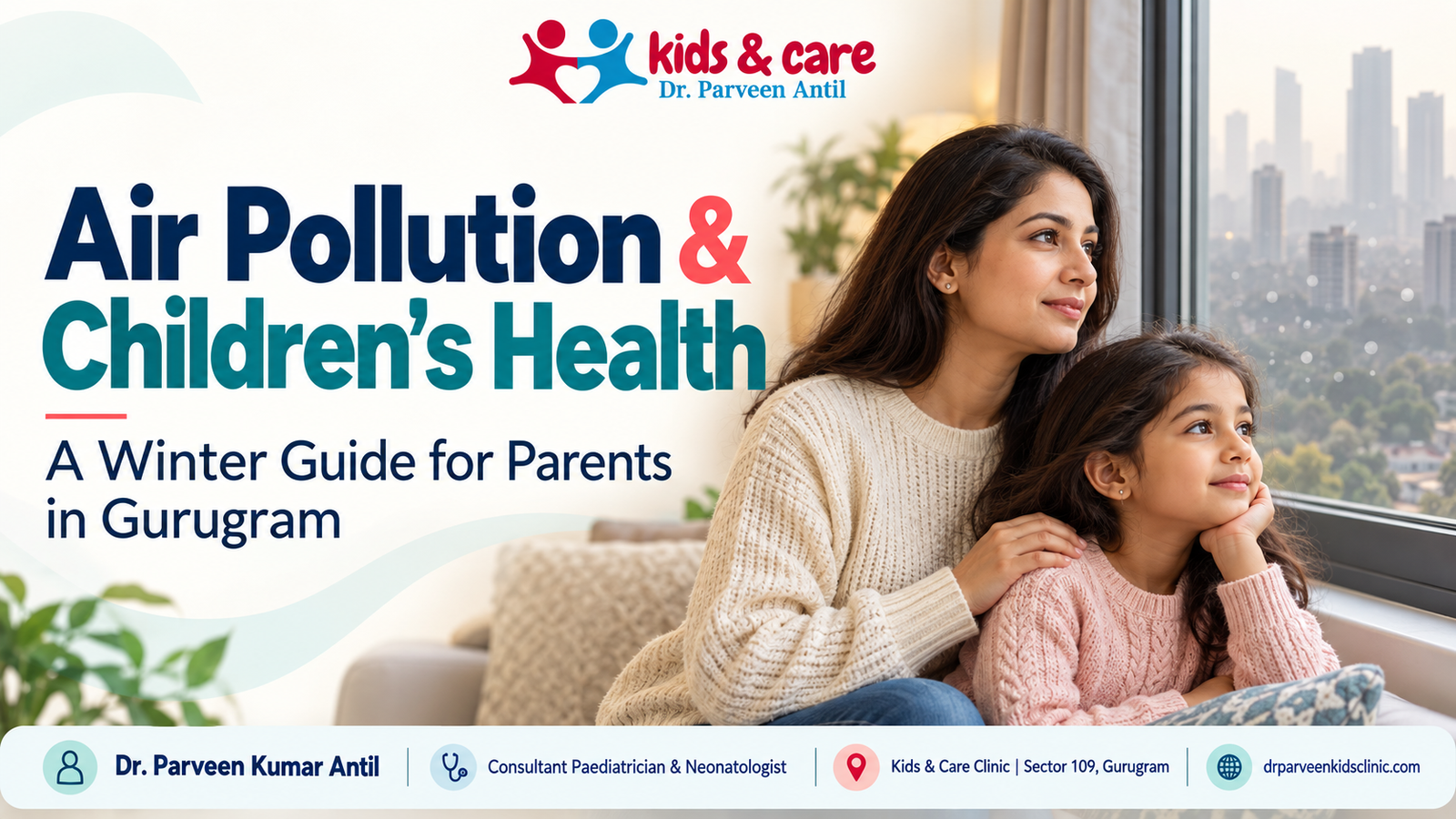
A school bag is packed, breakfast is ready, and your child is asking whether they can play outside after school. During the cooler months, there is another question to consider: what is the air quality like today?
For parents in Gurugram, planning winter activities can mean balancing outdoor time with concerns about pollution. Keeping children indoors all season is hardly practical. But checking local air quality, reducing smoke at home and recognising changes in your child’s breathing can help you make more informed decisions.
Here is a practical guide to caring for your child when air quality becomes a concern.
Why Are Children More Vulnerable to Air Pollution?
Children’s lungs are still developing. They also breathe more air relative to their body weight than adults, which can increase their exposure to pollutants.
Fine particles, often called PM2.5, can travel deep into the lungs. Younger children and those with existing respiratory conditions need particular attention. Pollution can affect children without asthma, too, so reducing exposure matters for the whole family.
Check the AQI Before Planning Outdoor Activities
The Air Quality Index, or AQI, helps communicate how polluted the outdoor air is. A higher number generally means greater concern.
Check a nearby monitoring station through an official source, such as the CPCB’s SAMEER app, and read the accompanying health advisory. Use the Indian AQI scale consistently, as different apps may display different national scales.
A citywide reading is useful, but conditions around your child’s school, home or usual playground may differ. Checking before outdoor plans is more useful than relying on yesterday’s reading.
Should Children Play Outside When Pollution Is High?
When pollution is high, reduce outdoor exposure and avoid strenuous outdoor exercise. Consider moving football practice, running games or cycling indoors, particularly for children with asthma.
Choose routes away from busy traffic and places where rubbish is burning. Do not assume that early morning is always the cleanest time to go out; check local conditions first. Follow school and public-health advisories when restrictions are issued.
Indoor time can still feel like play. Dancing, a simple treasure hunt or a gentle movement game can give children something enjoyable to do when outdoor plans change.
Pay Attention to the Air Inside Your Home
Closing the front door does not automatically make the air clean. Cooking fumes, tobacco smoke and burning incense can add to indoor pollution.
Keep your home and car smoke-free. Avoid burning incense and candles around children, and use kitchen extraction to help remove cooking fumes. During periods of high outdoor pollution, keep windows closed; ventilate when the outdoor air improves.
It helps to think about the places where your child spends the most time. Start with the bedroom, study area and main living space rather than trying to change everything at once.
Can an Air Purifier Help?
An air purifier can reduce some indoor pollutants, but it cannot remove everything. It works best alongside controlling pollution sources and ventilating with cleaner outdoor air.
If you choose one, check that it is suitable for the room size and follow the filter-maintenance instructions. A portable unit is usually designed for one room or area; it should not be assumed to clean the entire home.
Even with a purifier running, keeping smoke out of the house remains important.
Notice Patterns in Coughing and Breathing
A cough should not automatically be labelled a “pollution cough”. Respiratory symptoms can have different causes, and a child may need an assessment to understand what is happening.
Arrange a pediatric consultation if you notice:
- Coughing that repeatedly interrupts sleep.
- Wheezing or a whistling sound when breathing.
- Recurring symptoms during running or active play.
- Symptoms that affect normal activities.
- A need to use prescribed asthma reliever medicine more often.
Cold air and air pollution can trigger asthma symptoms in some children. However, these symptoms alone do not confirm asthma.
Before the appointment, note when the symptoms happen. Are they worse after the school journey, during play or at bedtime? Tell the doctor how long they have been present and whether your child already takes any medicines. These details can make the consultation more useful.
If Your Child Already Has Asthma, Review the Plan
Follow your child’s prescribed treatment and written asthma action plan. If symptoms are becoming more frequent, waking your child at night or limiting play, arrange a review.
The consultation is also a useful opportunity to check inhaler technique and discuss what to do if symptoms worsen. Avoid changing treatment simply because the weather or AQI has changed without following the agreed plan.
When Is Medical Help Urgent?
If your child is struggling to breathe, seek emergency medical care immediately. Do not wait for a routine clinic appointment or for the AQI to improve.
For a child with asthma, follow their emergency action plan while obtaining help. Worsening symptoms or symptoms that do not respond to the prescribed reliever require urgent attention.
Make a Simple Plan for Home and School
A practical family plan can be easier to follow than a long list of rules.
Decide who will check the AQI before outdoor activities. Keep a few indoor play ideas ready. If your child has a respiratory condition, make sure the school knows about their care plan and whom to contact if symptoms develop.
These steps can help reduce exposure, but families cannot solve air pollution alone. Cleaner transport, reduced emissions and coordinated public action remain essential to protecting children’s health.
Pediatric Consultation in Sector 109, Gurugram
If your child has recurring cough, wheezing or symptoms that are affecting sleep and play, a pediatric consultation can help clarify the next steps.
At Kids & Care Clinic, parents can consult Dr. Parveen Kumar Antil, Consultant Paediatrician & Neonatologist, about their child’s symptoms and ongoing care.
Clinic address: Shop 101, Ground Floor, Conscient One Mall, Sector 109, Gurugram
Appointments: +91 80599 01391
Website: drparveenkidsclinic.com
When booking, mention your child’s age and main concern. Bring previous prescriptions and any relevant medical records to the visit.
This article provides general health information. Individual advice depends on your child’s age, symptoms and medical history.
Medical disclaimer: This information is for general education and does not replace a medical examination, diagnosis or personalised treatment. Seek urgent medical care for severe or rapidly worsening symptoms.