You may first notice it while dressing your baby: cheeks that feel rough, a flaky patch on a leg, or skin that seems drier than usual after a bath. These small changes can leave you wondering whether your baby needs a different moisturiser—or a visit to the doctor.
Winter skin care for babies usually starts with a few gentle, consistent habits. Understanding what irritates your baby’s skin, and recognising when a rash needs medical attention, can help you care for them with more confidence.
Why Does Baby Skin Become Dry in Winter?
Children’s skin is thinner and more delicate than adult skin, so it can lose moisture more easily. Dry winter air, hot baths and harsh cleansing products can make this worse.
For parents, the first step is often to review the everyday routine rather than add more products. A shorter bath and a suitable moisturiser can make a useful difference.
Is It Dry Skin or Something Else?
Not every patch of irritated skin is simply winter dryness. Eczema, irritation from products and other conditions can also cause rashes.
Notice more than the colour of the patch. Is your baby rubbing or scratching it? Does it keep returning? Is the skin cracked, swollen or uncomfortable? Is your baby feeding and behaving normally?
A rash cannot always be identified by appearance alone. If you are unsure, have it assessed instead of trying several creams in succession. NHS guidance recommends seeking medical advice for a rash that worries you or occurs alongside signs of illness.
A Gentle Winter Skin Care Routine
1. Keep Baths Short and Lukewarm
Use lukewarm water and keep baths to around five to ten minutes. Avoid scrubbing, and use a mild, fragrance-free cleanser only where needed.
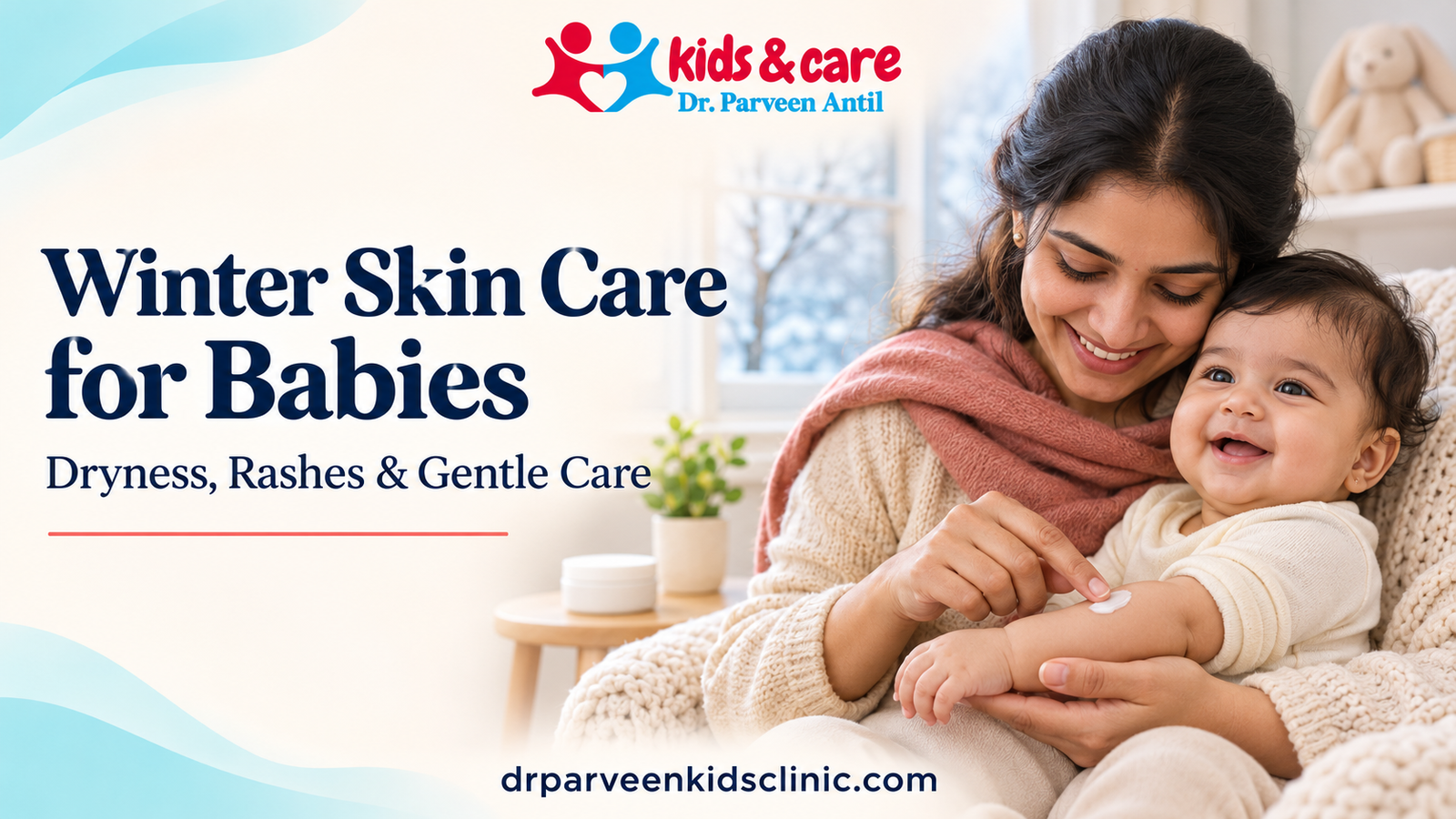
After bathing, gently pat the skin rather than rubbing it. Apply a fragrance-free moisturiser promptly. Thick creams and ointments generally work better for very dry or eczema-prone skin than thin lotions or oils.
For babies with eczema, moisturising twice daily—or as advised by their clinician—can be part of their care routine. If medication is prescribed, follow the instructions for how and when to apply it.
2. Choose Products by Their Ingredients, Not Their Scent
A pleasant fragrance is not something your baby’s skin needs. Choose fragrance-free cleansers, moisturisers and laundry products, particularly if your child has sensitive or eczema-prone skin.
“Unscented” does not always mean fragrance-free: a product may contain ingredients that mask a smell. Avoid bubble baths and baby powder on dry or eczema-prone skin, as these can add to irritation.
If a new product seems to make the skin worse, stop using it and discuss the reaction with your child’s doctor.
3. Keep Clothing Comfortable
Soft, breathable cotton is a useful choice next to sensitive skin. Wool and some synthetic fabrics may irritate children with eczema.
Use loose layers that you can remove when your baby becomes too warm. Keeping a baby comfortable does not mean wrapping them in as many layers as possible; overheating can make irritated skin more uncomfortable.
Keep your baby away from direct heat from room heaters and radiators. For children with eczema, these small changes can help reduce winter triggers.
4. Stay Consistent With Prescribed Eczema Care
If your baby already has eczema, continue the plan recommended by their doctor. Gentle cleansing, regular moisturising and avoiding known triggers remain important even between flare-ups.
Do not increase, stop or replace a prescribed treatment simply because the weather changes. Ask the clinician how to adjust care if dryness or itching becomes harder to manage.
When Should You Contact a Pediatrician?
Book an assessment if dryness persists despite gentle care, the rash keeps returning, or discomfort is affecting your baby’s sleep. Persistent irritation may need treatment beyond an everyday moisturiser.
Seek urgent medical assessment if the skin becomes hot, swollen, blistered or rapidly worse, or if your baby seems unwell.
Get immediate medical help for difficulty breathing, swelling of the lips or tongue, difficulty waking, or a rash that does not fade when pressed. A baby younger than three months with a temperature of 38°C or higher also needs immediate medical assessment. Do not wait for a routine appointment.
Frequently Asked Questions
Is cream or lotion better for dry baby skin?
For very dry skin, a fragrance-free cream or ointment generally retains moisture better than a lighter lotion. Your pediatrician can help you choose an appropriate product if your baby has persistent irritation.
Should I stop bathing my baby if they have eczema?
Not necessarily. Gentle bathing can be part of eczema care. Keep baths short, avoid hot water and scrubbing, and follow your clinician’s advice about frequency and treatment.
Can winter make eczema worse?
Yes. Cold, dry air and indoor heating can aggravate eczema in some children. Regular moisturising, comfortable clothing and avoiding overheating may help.
Baby Skin Care Advice in Sector 109, Gurugram
If your baby has persistent dryness or recurring rashes, a consultation can help you understand the cause and choose suitable care.
At Kids & Care Clinic, consult Dr. Parveen Kumar Antil, Consultant Paediatrician & Neonatologist, for advice tailored to your child.
Visit: Shop 101, Ground Floor, Conscient One Mall, Sector 109, Gurugram
Appointments: +91 80599 01391
Website: drparveenkidsclinic.com
Medical disclaimer: This information is for general education and does not replace a medical examination, diagnosis or personalised treatment. Seek urgent medical care for severe or rapidly worsening symptoms.