For children, Diwali is full of little joys—choosing festive clothes, helping with decorations, visiting grandparents and eagerly opening boxes of sweets.
For parents, there is often another side to the celebration: keeping curious hands away from flames, checking what a toddler is eating and settling an excited baby while fireworks go off outside.
A little preparation can make these moments easier. Whether you are celebrating at home in Sector 109, Gurugram, or visiting relatives, these practical Diwali safety tips can help your family enjoy the festival with more confidence.
1. Make Your Decorations Child-Friendly
Before guests arrive, take a look around your home from your child’s height. A diya on a low table or a trailing light cable may be easy for an adult to overlook—and very tempting for a toddler.
Keep lit diyas on stable surfaces, away from curtains, clothing and children’s reach. Avoid placing flames along routes where children run or play. Battery-operated lights can be a useful alternative in areas children can access, provided their battery compartments are securely closed.
Keep electrical wires tucked away, and leave matches and lighters where children cannot reach them. Loose sleeves, dupattas and flowing festive outfits should stay well away from flames.
During busy gatherings, agree on which adult is watching younger children. It is easy for everyone to assume someone else is supervising.
2. Choose Celebrations Without Children Handling Fireworks
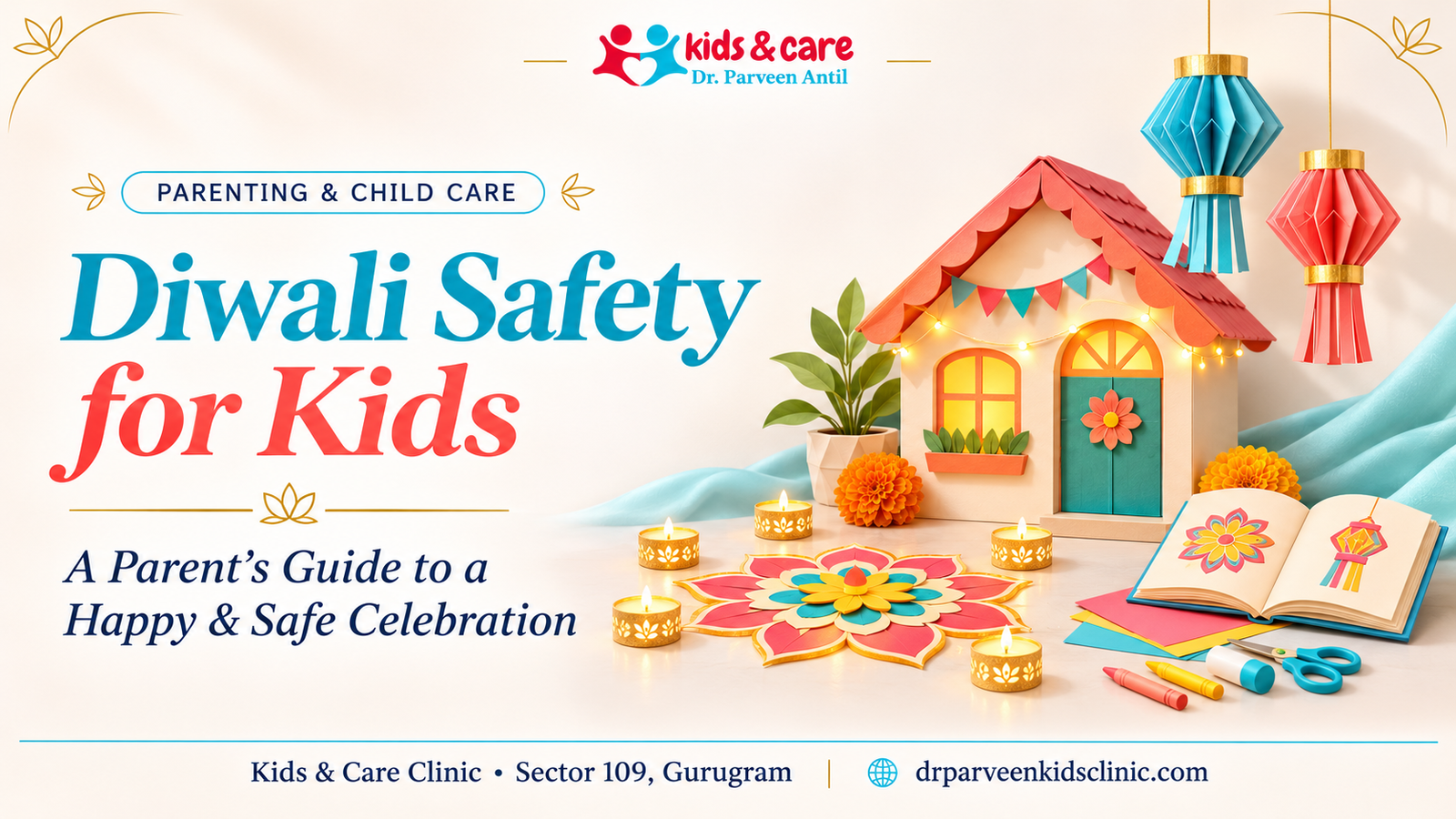
Children do not need to light crackers to enjoy Diwali. Decorating paper lanterns, painting unlit diyas or making a flower rangoli together can become memorable family traditions.
Sparklers are not a safe substitute for children: they burn at extremely high temperatures and can cause serious injuries. The American Academy of Pediatrics recommends leaving fireworks to trained professionals. Children should also stay away from used or unexploded fireworks.
Give children a simple rule before celebrations begin: watch from a safe place, and never pick up fireworks from the ground.
3. Plan a Quiet Space for Babies and Young Children
A sound that feels exciting to an older child may frighten a baby. Very loud bursts can also damage hearing.
Keep children away from firework launch areas and loudspeakers. If your child becomes uncomfortable, move somewhere quieter instead of encouraging them to tolerate the noise. Properly fitted hearing-protection earmuffs may help reduce exposure, but distance and a quieter environment remain important.
At home, set aside a calm room with a familiar toy or book. Having somewhere to take a break can make a long evening more manageable.
4. Enjoy Sweets With Attention to Age and Allergies
Festive food is part of the celebration. The aim is to make it enjoyable without letting regular meals disappear completely.
Offer familiar meals at roughly the usual times, and let children enjoy age-appropriate portions of festive treats. Have younger children sit down while eating, with an adult nearby.
Whole nuts should not be given to children under five because they can cause choking. Check sweets for whole nuts or hard pieces before offering them to a young child. Honey should also be avoided in babies under one year.
If your child has a known food allergy, tell hosts before the visit. Ask about ingredients and possible cross-contact when sweets are prepared or served. When the ingredients are uncertain, choose a familiar alternative and keep prescribed emergency medication accessible.
5. Leave Room for Rest
Late-night visits, unfamiliar surroundings and a busy schedule can be tiring, even when children appear excited.
Try to protect your baby’s usual naps and keep bedtime reasonably familiar. For older children, plan a quiet break between activities instead of filling every hour with another visit.
You do not need a perfect routine throughout the festival. A familiar meal, a favourite bedtime story and a little downtime can help children settle after a busy day.
6. Know What to Do if a Burn Happens
If your child touches a hot diya or another hot object, begin first aid promptly.
Cool the affected area under cool running water for 20 minutes. Remove nearby jewellery or clothing unless it is stuck to the skin. Keep the rest of the child warm.
Do not apply ice, toothpaste, butter, oil or creams, and do not burst blisters. Get prompt medical advice for a child’s burn, particularly if it is large, deep or affects the face, hands or genitals. Serious burns need emergency care.
Knowing these steps in advance helps you respond more calmly if an accident occurs.
7. Recognise Symptoms That Need Emergency Help
Do not wait for a routine clinic appointment if your child develops severe symptoms.
Seek emergency help for difficulty breathing, sudden swelling of the tongue or throat, collapse, blue or grey lips, or unusual unresponsiveness. These can be signs of a severe allergic reaction, which may occur without a rash.
If your child has a prescribed adrenaline auto-injector, use it immediately as instructed and call emergency services. Do not wait to see whether symptoms settle on their own.
A Small Checklist Before You Celebrate
Before leaving home or welcoming guests, check that:
- Diyas, matches and electrical wires are out of children’s reach.
- A responsible adult is supervising younger children.
- Food is appropriate for your child’s age and any known allergies.
- Prescribed medicines and emergency plans are accessible.
- Your child has somewhere quiet to rest.
The most meaningful Diwali memories are often simple: decorating together, laughing with cousins and sharing time as a family. A few thoughtful precautions help keep the focus on those moments.
Child Care Guidance in Sector 109, Gurugram
If you have questions about your child’s feeding, growth, allergies or general health, a pediatric consultation can help you plan care around their individual needs.
Dr. Parveen Kumar Antil
Consultant Paediatrician & Neonatologist
Kids & Care Clinic
📍 Shop 101, Ground Floor, Conscient One Mall, Sector 109, Gurugram
📞 +91 80599 01391
🌐 drparveenkidsclinic.com
Contact the clinic to book a pediatric consultation.
This article provides general information and does not replace individual medical advice. For severe symptoms or serious injuries, seek emergency care immediately.
Medical disclaimer: This information is for general education and does not replace a medical examination, diagnosis or personalised treatment. Seek urgent medical care for severe or rapidly worsening symptoms.